
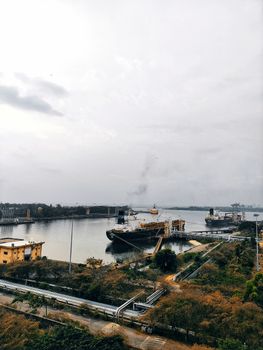
The narrative surrounding Sri Lanka’s Hambantota port is undergoing a significant reevaluation, compelling stakeholders from around the globe to revisit assumptions about international investments and their implications. The once-prominent notion of a “debt trap” associated with Chinese investments is fracturing under scrutiny, particularly as the port adaptation seems to gain momentum that surpasses pessimistic forecasts.
Originally financed partially by China, with a loan of $1.4 billion, Hambantota emerged as a shining example of how infrastructure projects could create significant economic repercussions. However, this narrative quickly pivoted toward caution—labeling similar investments as conduits to crippling debt and economic vulnerability, particularly for developing nations. Yet current developments throw this perspective into question. The port, once a beacon of potential downturn, has begun showing signs of economic resilience. It generated impressive revenue with reported figures reaching upwards of $90 million in the last year alone, helping counterbalance the fears surrounding its ownership and financing.
This shift in economic performance raises critical questions about the framing of investment narratives. Can the lessons drawn from Hambantota serve as a precursor for other countries navigating their financial partnerships? The implications are weighty; rather than serving as an anchor to economic turmoil, Hambantota might arise as a case study of diplomatic engagement yielding benefits rather than burdens. The reduction of this complex issue to a catchphrase – “debt trap” – obscures the realities on the ground and stifles nuanced discourse.
What should be of concern is the geopolitical context that birthed the “debt trap” narrative. Critics often project motives on China’s Belt and Road Initiative, portraying it merely as a strategic ploy for global dominance. Yet, the positive outputs from Hambantota, evidenced by local job creation and boosted trade flows, run the risk of being overlooked when summarizing the efficacy of foreign investment.
Moreover, the past year’s revenue highlights an important misconception about the risks tied to global capital flows. With projections indicating further growth in revenue as the port’s capacity and operations expand, this narrative shift implores analysts and observers to reconsider preconceived notions of foreign aid and investment. This reflects broader truths about international economic relations, urging a comprehensive exploration of motivations from both investing nations and recipient countries.
Amidst this evolving scenario, caution is warranted. The Hambantota experience cannot be duplicative across different contexts, and caution should still guide policymakers in assessing their fiscal vulnerabilities and negotiating terms that safeguard national interests. However, the information emerging from the port serves as more than just statistical anomalies; it develops a more complex understanding of the intertwined destinies of sovereign nations seeking development and the role of strategic investments.
The Hambantota narrative is pivotal, not solely as an isolated case but as a reflective point in global economic strategies. Emerging from the shadows of the “debt trap” rhetoric, this port may not only change Sri Lanka’s fortune but could redefine how countries perceive and engage with foreign investments in a rapidly globalizing economy. The dialogue must shift from fear to an informed analysis of potential—on both sides of the negotiating table.