
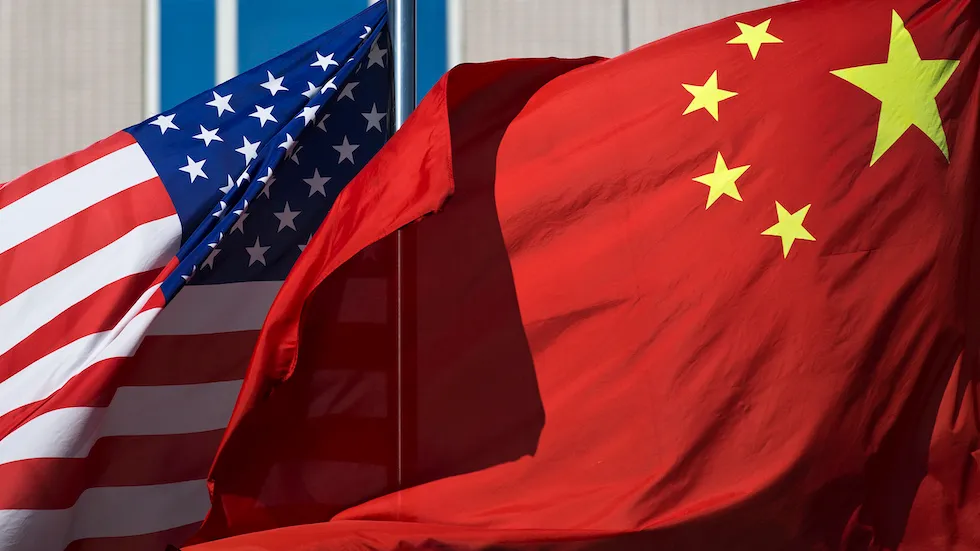
Why wouldn’t the Chinese and the U.S negotiate an end to the strife in the Middle East?
The question would be dismissed as ludicrous by most. China is not among the chief protagonists in this war, and the main actors are the U.S, Iran and Israel.
However, the closure of the Straits of Hormuz has meant that the Chinese would be apprehensive about the passage of ships carrying crude oil to their country, which depends heavily on Middle Eastern energy supplies.
Besides that, the entire war could upset the supply lines of fertilizer to China if the Straits of Hormuz remains closed. Though the Iranians have allowed some Chinese vessels to pass through the Straits, that may not be the result that obtains at the end of the war, if either of the parties can find an off-ramp to end the conflict.
The supply lines that keep the Chinese economy humming are important for the country’s economy, and it is a fact that the current American control over Venezuela has already disrupted the supply of South American crude to the Chinese.
If the Iran war concludes with the Americans on top, it would be as if the dominoes have fallen one by one in favour of the Americans. Though this is not an outcome anyone may predict at the moment, it is possible that the Iranians would not be able to hold out for much longer.
This article is not exactly about the war. It is about how the odds would be stacked up in the race for global dominance. The U.S has not shown any inclination at all to stand back and watch while the petro-dollar — the currency in which buyers have to pay for oil on the global market — is being sniped at, while according to some, fast surging towards irrelevance …
CLOSURE
Besides that, the Chinese were acquiring dominance in the AI race, with established global dominance in rare-earth minerals that are required to manufacture AI related processors etc. However, specific war scenarios such as the strife in Iran now, with Israel also in the melee, is almost never discussed as a super-power showdown or a proxy war at least of sorts, between China and the U.S.
But that’s beside the point. Nobody may be keeping score, at least not in a way that involves the superpowers. But it is important that the countries that aren’t necessarily aligned to any of the big powers know exactly what’s going on in the world, and whose Navy calls the shots in international waters.
Of course the U.S Navy is far and away, the dominant naval force. The U.S basically rules the seas and therefore the sea routes. However, analysts may question the value of this type of naval dominance if the U.S cannot for example, ensure free passage for ships through the Straits of Hormuz.
But theories abound. Some experts say that the U.S may not worry too much about a semi-permanent and inconvenient closure of the Straits because it will mostly inconvenience their chief economic rival, the Chinese.
If what’s going on in the Middle East, is at least partially a war for dominance between the big powers — namely China and the U.S — why should small nations bear the brunt of these big power skirmishes?
This brings us to the initial poser of this article. Couldn’t China and the U.S conduct talks expressly centred around matters involving the current conflict in the Middle East?
No international actors with clout are able to facilitate a meeting of this sort. For example, Kier Starmer the British prime minister is mortally scared of getting involved with the Americans, as a supporting military force in the Middle East. He feels it would be a repeat of his predecessor Tony Blair’s notorious involvement with George. W. Bush in Iraq.
Everyone knows how that ended for Blair, who went from being superstar to virtual international pariah. The Iraq misadventure which proved there were no weapons of mass destruction in the country — the pretext for the American and British invasion — ended up with both Blair and President Bush being branded war criminals by some at best, or trigger happy warmongers by others, at worst …
BREWING
It is obvious that the supply of oil to China is threatened as a result of the double blockade — that of the Iranians and the Americans — of the Straits of Hormuz. Recently an Iranian ship that had been mainly deployed in the past few months to transport oil to China was shot at, and basically captured by the U.S naval forces.
Though it is not exactly a proxy war between two giant superpowers that is brewing in the Middle East between the U.S and China, the superpowers are indubitably actors, and though the U.S is a key participant, the shadow presence of China always looms large in the background.
In this context China-U.S talks (if someone can make them happen) on how specifically the issue of the management of shipping through the Straits of Hormuz can be handled, can clarify matters to a great extent. Would the two big powers consent to such talks?
They should, because both nations aren’t isolated but are trading partners with a myriad countries that depend on a steady supply of fuel that originates from the Middle East, for basic day to day sustenance. These other nations also depend on vital products such as fertilizer being shipped via the Straits of Hormuz, for crop growth that would ensure uninterrupted food supplies.
SUMMIT
The big powers therefore have a global obligation to approach this problem differently. They have to map up their stakes and size-up — for the benefit of the world — their separate abilities to control the conflict and bring about some form of closure to these events that are having such a negative impact, especially on the people in developing countries, that have little or nothing to do with this war in the first place.
The said developing nations are where the markets are, for both American and Chinese goods after all, and besides all that, a lot of them are geopolitically important as well. It’s why both aforementioned powers have invested much effort to retain dominance in various parts of the world that are the locations for important harbours, vital natural resource deposits etc.
There are other important actors such as Russia that also have a greater ability to influence events than most would imagine. Perhaps a summit involving the leaders of these three nations, the U.S, Russia and China could be the key to resolving the problems in the Middle East, at a time the role of the U.N in bringing concerned actors together for negotiations seems almost non-existent.
The other alternative is that the shadow boxing between these powers continues. But this is going to impact the world and have a devastating affect on human lives that would eventually probably make most people want to display open antipathy towards how big powers disport themselves, no matter their particular modus operandi at any given time.
At this moment, some of the goings on the in Middle East seem farcical. Ships are blockaded by both Iran and the U.S, and various statements are being made without mentioning where the ships are headed.
Perhaps big powers however obliquely they may be involved in this war, may have unstated agendas.
The petro-dollar which denotes the currency in which most oil transactions are made in the Middle East, as mentioned earlier, is also probably among the slew of issues that figure in this conflict.
Almost obviously, superpower politics figure markedly in this backdrop and it would be ridiculous to pretend otherwise. It doesn’t mean that regional issues are totally insignificant, but sometimes it’s almost as if there are many elephants in the room.
In the meantime the global media dutifully goes through the motions of covering a conflict only in half measure. This is farcical, and is tantamount to misinformation. But this so called legacy-media is never quite dependable, and that’s old hat. It will take others to broach the accurate narrative that would keep people properly informed.