
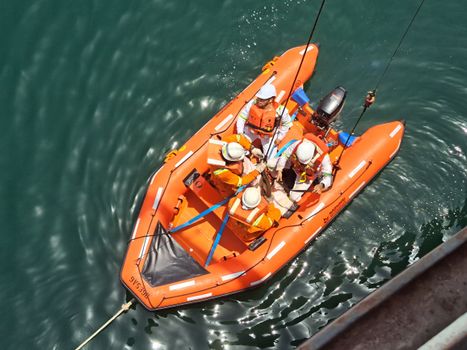
The recent decision by Sri Lanka to move 208 rescued Iranian ship crew members to a naval camp raises important questions about international maritime practices, humanitarian responsibility, and Sri Lanka’s own geopolitical positioning. The number alone—208—signals that this incident is not merely a trivial rescue operation; rather, it poses a complex intersection of human rights and international law on the high seas.
Rescue operations at sea typically reflect a country’s adherence to international maritime regulations, which emphasizes the protection of human life as paramount. The actions taken by Sri Lanka not only highlight the urgency of humanitarian aid but underscore the responsibilities nations bear in upholding safety standards. However, the placement of these individuals into a naval camp introduces a layer of uncertainty regarding their treatment and long-term fate. This raises critical concerns over transparency and the potential for stranded individuals to become pawns in broader political agendas.
Furthermore, the Iranian crew’s rescue occurs in a context fraught with heightened tensions surrounding Iran’s naval operations and maritime interests. Iran has faced scrutiny and sanctions over various activities, and the more than 200 members of this crew exemplify the human cost of international disputes. Their relocation to a naval facility rather than a more public refugee or processing center could fuel speculation about Sri Lanka’s intentions. Are these individuals being sheltered until their fates are determined, or is this a prelude to their eventual repatriation under diplomatic pressure?
Sri Lanka’s geopolitical charm often rests on its strategic location in the Indian Ocean, making it a vital player in regional trade and security dynamics. With incidents such as this one, the country must navigate its relationships with powerful neighbors while balancing humanitarian obligations. The nuances of this particular rescue operation could offer insights into how Sri Lanka seeks to position itself amidst competing international interests.
In conclusion, while the rescue of the 208 Iranian crew members might be framed as a straightforward humanitarian success, it implicates a range of ethical, legal, and political complexities. The decision to house them in a naval camp rather than a more conventional reception facility invites scrutiny into Sri Lanka’s adherence to international law, the treatment of refugees, and the nation’s strategic goals. Each element of this story demands careful consideration, as the world watches how Sri Lanka manages not just this incident, but potentially broader implications for maritime law and humanitarian action on a global scale.