
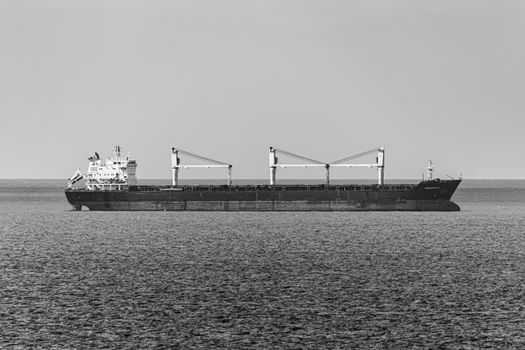
The recent offloading of 208 crew members from a second Iranian ship in Sri Lanka just a day after a U.S. strike sank an Iranian frigate marks a significant event laden with geopolitical ramifications. This incident raises questions not only about maritime security but also about the evolving dynamics of U.S.-Iranian relations amid escalating tensions in the region.
The offloading of such a substantial number of crew members signifies a reconfiguration of Iranian maritime operations. While immediate attention falls on the direct actions of the U.S., which ought to be critiqued for possibly destabilizing an already fraught area, the implications on Iranian naval capabilities can’t be overlooked. The sinking of the frigate, a vessel type typically tasked with fleet coordination and deterrence missions, indicates a potential shift in Iranian military posture and strategy. The loss of this ship, combined with the unexpected evacuation of crew personnel, severely hampers Iran’s operational reach within volatile waters.
Moreover, this naval debacle highlights the vulnerability of maritime ships in conflict zones. With 208 personnel extracted from a single vessel, it’s crucial to examine the operational integrity of these ships. The implications of decreased manpower are significant; not only does this affect daily operations but potentially morale as well, as crews may question the safety and efficacy of their missions in light of failing security structures.
On a broader geopolitical scale, the evacuation acts as a signal not just to Iran but to the international community. In a time when tensions continue to rise in the Middle East, actions such as the one taken by the U.S. can set off a chain reaction. Countries in the region are likely re-evaluating their alignment and strategies in response to U.S. aggression and Iranian vulnerability. The fragility of maritime commerce routes also comes into sharp focus; nations dependent on these shipping lanes must reconsider their security protocols and diplomatic stances regarding vessels processing through these waters.
Additionally, the Sri Lankan government’s involvement complicates the situation further. Their role in facilitating the offloading brings forth concerns about sovereignty and international obligations amidst conflicts. Does Sri Lanka risk becoming a pawn in larger geopolitical chess games, or will they assert their own interests? The precise nature of their diplomatic relations with both the U.S. and Iran could determine future interactions and economic pathways, particularly in light of the need for maritime security in their territorial waters.
In sum, the offloading of 208 crew members from the Iranian ship encapsulates the multifaceted issues arising from U.S.-Iranian tensions. This incident signifies not just an immediate operational setback for Iran but also sends ripples across diplomatic waters, challenging other regional players to reconsider their positions in a climate marked by uncertainty. The response from international actors, including Sri Lanka, will be pivotal in shaping future maritime policies and political alignments in an increasingly polarized environment.