
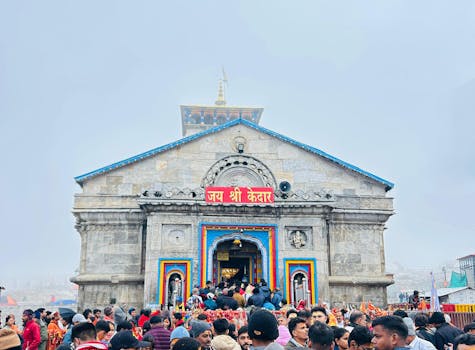
The landscape of pilgrimage tourism is fundamentally shifting as Saudi Arabia aligns itself with a growing list of destinations grappling with heightened challenges. This expansion includes Japan, Thailand, Sri Lanka, Nepal, and India, countries that face mounting pressures stemming from geopolitical tensions, particularly the ongoing hostilities related to Iran, Israel, and the United States. This reality raises important questions about the sustainability of pilgrimage tourism in an increasingly volatile global environment.
Pilgrimage tourism, often perceived as a stable segment of the travel industry, is now being buffeted by airspace disruptions and climbing travel costs. These factors not only jeopardize the accessibility of spiritual sites but also threaten the financial viability of destinations that rely heavily on this influx of visitors. The convergence of these challenges underscores a dual crisis: a loss of safety and an increase in financial barriers.
The implications for Saudi Arabia as it embraces this expanded role are profound. The nation has long sought to position itself as a leading destination for religious travel, especially with its holy sites in Mecca and Medina. However, as tensions remain high in the Middle East, particularly regarding Iranian influence and its confrontations with the U.S., one must question whether the Kingdom can effectively attract the millions of pilgrims it envisions while these geopolitical tensions simmer. The fear of conflict can dissuade travelers from making the journey, especially when safety is overshadowed by rising military posturing.
Simultaneously, airspace disruptions are no trivial concern. With airlines adjusting their routes to avoid politically charged air zones, the cost of travel is escalating. This environment creates a significant deterrent for potential pilgrims who may already be teetering on the edge of their budget. The intersection of pilgrimage aspirations and rising travel operating costs represents a stark dichotomy that could diminish participation in what has historically been a deeply personal journey of faith.
The situation becomes more complex with each added factor. Did Saudi Arabia anticipate its inclusion in a narrative characterized by disruptions? Or is this an indication of desperate alignment with legacy pilgrimage hotspots, signalling a reactionary stance rather than a proactive strategy?
As Saudi Arabia joins this eclectic group of countries facing pilgrimage tourism challenges, a clearer picture emerges: The future of travel for spiritual and religious purposes is far from certain. Rising travel costs coupled with geopolitical uncertainties could redefine not just who travels, but where they choose to go. The imminent questions are whether the risks outweigh the benefits, and if the pilgrimage experience can evolve in the face of these mounting pressures without losing its essence.
Ultimately, the world of pilgrimage tourism now stands at a crossroads. With every destination facing spiraling costs, potential violence, and political uncertainty, one must wonder: will travelers be deterred, or will the inherent spiritual urgency drive them to seek solace amid chaos? The flux of the pilgrimage tourism landscape demands ongoing scrutiny, and it is time for stakeholders to address these realities head-on if they wish to salvage this vital aspect of global culture and commerce.