
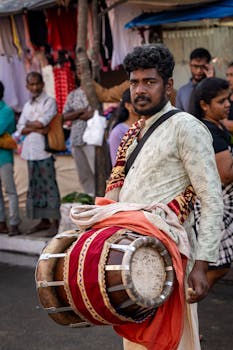
The recent arrest of a Tamil musician in Sri Lanka has ignited significant backlash, particularly from Brampton Mayor Patrick Brown, who has voiced his condemnation regarding the incident. This episode not only reveals the ongoing challenges facing artists in regions with stringent governmental control but also highlights the role of international politicians in advocating for human rights.
The musician’s arrest spotlights the precarious position of Tamil artists in Sri Lanka—a community that has, for decades, faced systemic marginalization. While specific details surrounding the musician’s case were not disclosed in the initial report, the underlying implications are crystal clear: the suppression of free expression remains a potent tool in the hands of the Sri Lankan authorities. This incident does not exist in a vacuum; it resonates within a broader context of political repression that has been characteristic of the post-civil war environment in the country.
Patrick Brown’s vocal stance as a mayor highlights an essential intersection between local governance in Canada and the advocacy for human rights in distant lands. His condemnation serves as a reminder of the responsibility that political leaders wield, particularly in multicultural communities like Brampton, which is home to a significant number of Tamil Canadians. The challenges faced by a Tamil musician in a faraway land could echo through the corridors of Brampton’s City Hall, underscoring local leaders’ vital role in championing global human rights causes.
The reactions from Brown and others reflect growing international awareness and interconnectedness regarding cases of human rights violations. In an age where social media amplifies voices and incidents worldwide, the pressure on governments to uphold civil liberties despite geopolitical tensions has intensified. Leaders like Brown tap into this dynamic, rallying their constituents not only to raise awareness but also potentially to take actionable steps through diplomatic channels.
This arrest also prompts essential questions about the resilience of artistic expression amid oppressive regimes. Art has always been a vehicle for resistance and a platform for marginalized voices; thus, the suppression of artists like the Tamil musician is emblematic of the systemic efforts to silence dissent. Yet, the pain expressed through music can catalyze solidarity and protest, challenging the status quo and connecting communities scattered across borders.
Bringing attention to such cases is vital because it can foster a dialogue around the importance of cultural rights, continuity of cultural identity, and the socio-political implications of artistic expression. As more local leaders take up the mantle of activism, the global context could sway public opinion, embolden artists, and prompt a reassessment of governmental strategies that seek to stifle creativity.
In sum, the arrest of a Tamil musician serves as a critical flashpoint, igniting discussions that extend far beyond the borders of Sri Lanka. The actions of leaders such as Patrick Brown resonate internationally, encouraging a concerted movement towards advocacy, resistance, and ultimately, the quest for justice.