
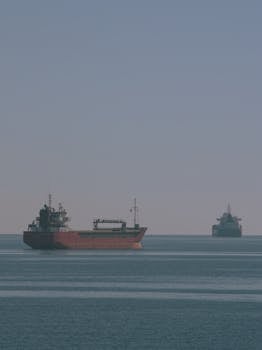
The recent sinking of an Iranian warship by the United States marks a significant escalation in international maritime tensions, but it is the subsequent custody taken by Sri Lanka of an Iranian vessel that further complicates this geopolitical landscape. This sequence of events underscores the intricate interplay of power dynamics, national interests, and the precarious balance of alliances in an already volatile setting.
The U.S. Navy’s actions against the Iranian warship have been framed within a broader context of asserting maritime security and curbing Iran’s influence in strategically critical waters. This decision, however, raises critical questions about the implications of external military actions on regional sovereignty. The U.S. assertiveness is not merely an isolated act of naval enforcement; it reflects a calculated strategy that attempts to project power while also signaling to allies and adversaries alike. The sinking of an Iranian warship serves notice that the U.S. is willing to engage decisively, yet it is essential to ponder how this will affect Iran’s military posture and its maritime ambitions in the Gulf.
Conversely, Sri Lanka’s decision to take custody of an Iranian vessel introduces a new dimension. This development could signify a pivot toward frontline diplomacy amid rising tensions between two regional heavyweights, the U.S. and Iran. Sri Lanka’s geographic location makes it a critical player, acting as a conduit for trade and maritime passage between the East and West. By holding an Iranian vessel, Sri Lanka not only engages with Iran but also navigates the complex ripple effects of U.S. actions. The question arises whether this was a prudent decision based on national interests, or if it will embroil the nation in deeper conflicts linked to the U.S.-Iran standoff.
Issues of sovereignty and external influence are starkly highlighted by these events. The international ramifications extend to broader trade considerations, especially for nations reliant on stable maritime routes. Sri Lanka’s strategic maneuvers could redefine its relationships with both the U.S. and Iran, as it finds itself balancing the demands and pressures from both sides.
The implications of these developments should not be underestimated. The exchange between the U.S. and Iran, now amplified by Sri Lanka’s pivotal role, emphasizes the interconnectivity of global maritime issues. It also reiterates the importance of understanding regional players not only as victims or passive observers but as active agents capable of influencing the course of dialogue—or conflict.
As the situation unfolds, it remains crucial for observers to monitor not just the broader narrative of U.S.-Iran tensions but also the responses and strategies of nations like Sri Lanka that find themselves impacted by these major international currents. The maritime chessboard is in constant flux, and the movements of pawns, knights, and kings will dictate the geopolitical landscape in the times to come.